 Ukraine Military History Institute

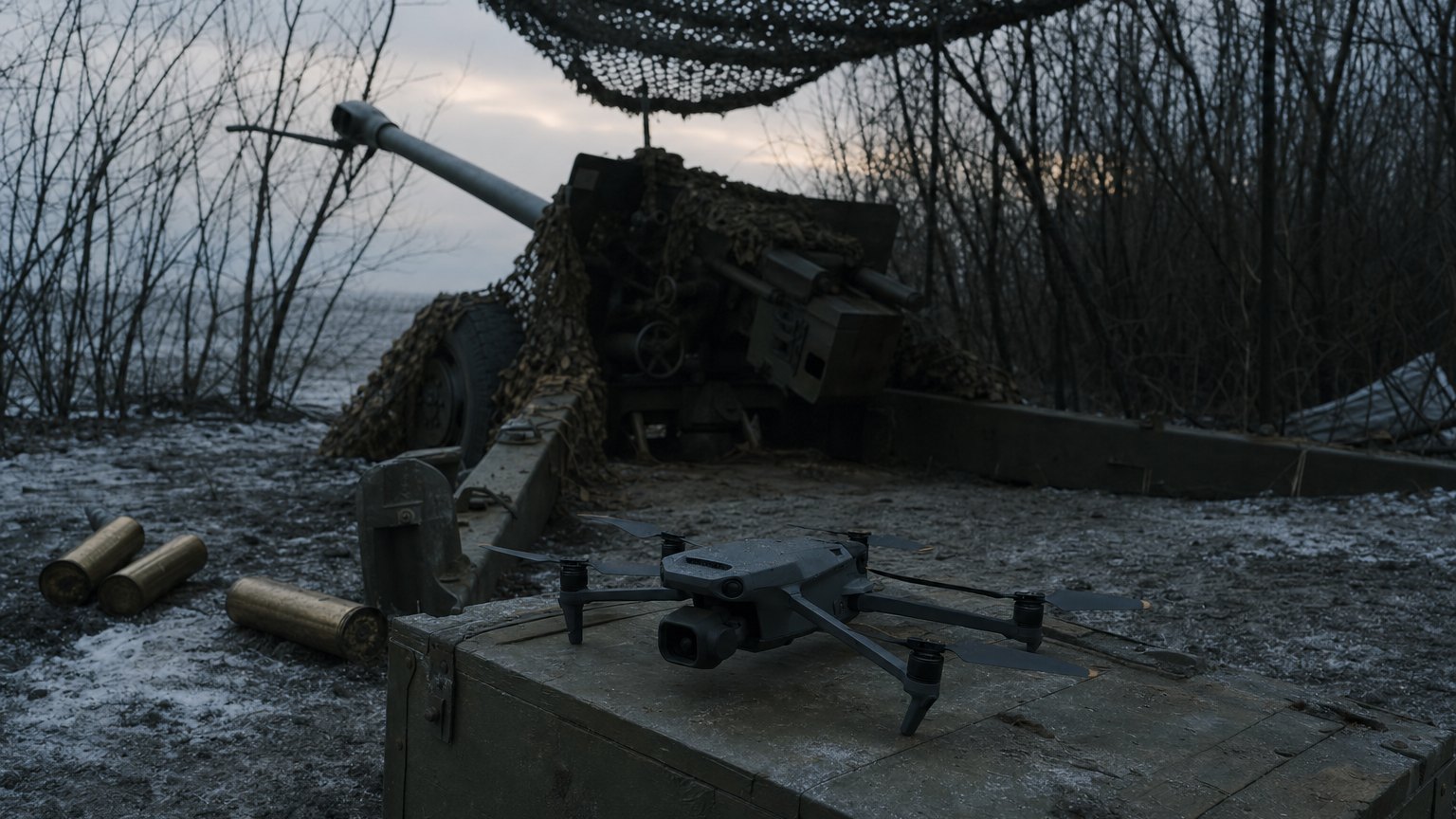
Drones, Robots and Autonomy
How to Hunt Drone Teams: Rob Lee and Putiata on Howitzers
Six to eight rounds, then drones: Rob Lee and Dmytro Putiata on hunting enemy drone teams with ISR, FPVs and maybe one or two howitzers.


Rob Lee and Dmytro Putiata break down the war in Ukraine. Samuel Cook widens the lens to the military history behind modern war.

At 1 a.m. on 27 February 2022 every car at the Slovak border was leaving Ukraine. One former tennis pro walked in. Turning SBU Alpha down, the Oskil crossing, arming FPV drones from old Soviet bombs, and why SBU Alpha went public on Operation Spiderweb.
Watch & read →
A Ukrainian corps ran a multi-brigade offensive and, by its commander’s count, lost seven times fewer soldiers than Russia — 250 prisoners, 12,000 captured drones. The man advising that corps goes by the call sign Jackie. The avalanche assault, ground drones behind Russian lines, the cappuccino line, and the culture that made it possible.
Watch & read →
Nicholas I started a war he was certain he could not lose, and lost it in Ukraine without one decisive battle. Ukraine’s former defence minister on the siege of Sevastopol that was never a siege, supplies that reached Crimea faster from London than from Moscow, and the third way a war is lost — running out of ways to win.
Watch & read →
A hackathon they did not place in, a tweet that reached millions, and drone navigation that works with no GPS at all. Why buying at brigade level makes this the only market that tells you the truth about your product — and the catapult that broke it on day one.
Watch & read →
The four tasks of a strategic leader, and why getting the first one wrong makes the other three worthless — tested against MacArthur at the Yalu, Vietnam in 1968, the Surge in Baghdad, and nine years of Afghanistan. The first interview this podcast ever recorded.
Watch & read →
The fund nobody would bank, why founders must drop the dual-use disguise, the $128 million Bundeswehr contract, and the unit that bolted Starlink onto a drone and doubled its reach — free R&D from the best military laboratory on earth.
Watch & read →
Rob Lee and Francis Farrell just returned from a week on the front line. The change of command, the expanding kill zone, glide bombs, autonomous drones, and why the next month of weather decides whether Russia gets a foothold in Kramatorsk and Sloviansk before winter.
Watch & read →
The CEO of Ukraine’s defense innovation platform — a former bank CIO — on problem statements instead of requirement documents, six laws and fifty decrees rewritten, 600 products codified to NATO standards, and why he is certain the majority of strikes will be fully autonomous next year.
Watch & read →
One of the last journalists still reporting from the zero line: Dobropillia — the most destroyed city he has seen — the Donbas fortress belt under pressure, the October–November danger window, and the mobilization question hanging over the winter.
Watch & read →
Rob Lee and Dima Putiata on the war right now: have we reached a turning point? The most sophisticated Russian assault yet, 20 FPVs to stop one tank, 80% of armor losses from drones, Starlink as a single point of failure — and Ukraine’s new commander-in-chief.
Watch & read →
His face is blurred and his voice is altered — he is still fighting. A GUR special forces company commander on Russia’s rat tactics, a kill zone where 80% of casualties come from drones, and why future special operations units should be max 30% infantry.
Watch & read →
Two Marines of the same 36th Brigade battalion — one British, one Ukrainian — together for the first time since Russian captivity: the siege of Mariupol, the breakout attempts, capture, torture, the show trial — and the warning both now carry to the West.
Watch & read →
The Fedorov panel concludes: his farewell list of the army’s systemic problems, debated point by point — E-points and its perverse incentives, the half-built corps reform, busification, the foreigners’ revolving door — and the panel’s verdicts.
Watch & read →
Emergency panel filmed in Kyiv two days after the dismissal of defense minister Fedorov: why the streets are protesting, the case for gutting the general staff, the Fedorov–Syrskyi clash over how to fight this war — and the window for a 2026 offensive.
Watch & read →
The captivity story concludes: told he was going home, Ievgen Malik was instead transferred to Prison No. 10 in Mordovia — the standing regime, ritualized beatings, scars hidden from inspectors — until Friday, September 13th, 2024, when his name was finally called.
Watch & read →
Rob Lee interviews Ievgen Malik on Mariupol’s final days: the failed April 9th breakout that killed ~400 marines in one night, the negotiation on the bridge, the surrender — and the descent through Olenivka into Ryazhsk prison, where the beatings began on arrival.
Watch & read →
The origin story before the captivity arc: Poltava, Maidan from abroad, signing with Ukraine’s oldest Marine battalion without telling his parents — and holding a Mariupol factory position for a month, knowing the only outcomes were death or captivity.
Watch & read →
Rob Lee interviews Colonel “Shram” Tovstyi, commander of UAV Battalion Corsair (38th Marine Brigade): three-layer drone doctrine, Rubicon, fiber optic vs radio FPVs, UGV logistics, and the point system — from the Pokrovsk front.
Watch & read →
Rob Lee returns from Zaporizhzhia, Donetsk & Kharkiv with a granular frontline read: corps-level Hornets, brigade reform, $4K recon drones, UGVs, AI targeting, and why Ukrainian armor assaults may return.
Watch & read →
Rob Lee and Dmytro Putiata break down the 15km kill zone, drone-driven brigade autonomy, the Dobropillia crisis, middle strike operations, and Ukraine’s path back to maneuver warfare.
Watch & read →
Sam Cook and Lt. Gen. Zabrodskyi dissect the Blitzkrieg myth, elastic defense, and mission command — how the German army innovated under fire from 1916 to 1940, and what Ukraine can learn from it.
Watch & read →
Rob Lee and Dmytro Putiata break down the 2025 battlefield — Russia's infiltration tactics, drone lines, electronic warfare, and how Ukraine is adapting.
Watch & read →
Sam Cook and Rob Lee on why Ukraine's military past is essential to understanding today's frontline — from tracking the Russian buildup to the lessons reshaping modern warfare.
Watch & read →
Drones, Robots and Autonomy
Six to eight rounds, then drones: Rob Lee and Dmytro Putiata on hunting enemy drone teams with ISR, FPVs and maybe one or two howitzers.

Reading and Recording the War
Shaun Pinner, the British Marine captured at Mariupol, on Russian mortars that never adjusted and steelworks assaults resent with 8, 20, then 30 men.


Reading and Recording the War
Rob Lee lists four ways the front beats a year ago yet calls no turning point. Dmytro Putiata and Francis Farrell on what one would actually look like.


The Ukraine Military History Institute brings together military historians, veterans and defense analysts to record and teach how this war is actually being fought, while the people who fought it can still tell you. It was founded by Samuel P.N. Cook and is built by the Borderlands Foundation. This podcast is its public work.
Ukraine Military History is a podcast about how wars are actually fought, and won. Co-hosts Rob Lee and Dmytro Putiata — both Marines and respected military analysts — break down the war in Ukraine in the operational detail headlines miss: drone warfare, force structure, and what’s really happening along the front.
Host Samuel Cook, who taught Russian military history at West Point, widens the lens to the campaigns and doctrines that shaped modern war and still echo on today’s battlefield. Produced by the Borderlands Foundation, the show preserves and teaches the hard-won lessons of Ukraine’s fight for the free world.
Get an email when a new episode drops. No spam, unsubscribe anytime.